
For small insurance and financial-service teams
Insurance workflow software for renewals, assessments and client follow-ups
See which client case is waiting for documents, payment, approval, correction, issuance or delivery.
Simple Workflow keeps the next step, responsible person and case updates together for agencies, assessment businesses, loan offices and finance teams.
The waiting problem
Client cases can wait silently at different stages
A renewal may need a comparison. An endorsement may be waiting for payment. An assessment may have an inspection but no report. A loan request may lack one document.
A broad “in progress” label hides the next action. A useful workflow shows what is missing, who owns it and when the follow-up is due.
Anonymized customer evidence
Five recurring financial-service patterns
The observed lines summarize configured workflows in the workbook. Each suggested route adapts that evidence into a possible Simple Workflow setup.
Observed: comparison, discussion, collection, issuance, update, delivery, assessment and correction
Policy renewal or new business
Renewal due → Compare options → Client discussion → Collect payment → Issue → Check or correct → Update and deliver
Suggested setup: Add an owner and due date at every client-dependent handoff, with the final document attached where appropriate.
Observed: booking, assessment, report, approval, supporting material, invoice and closure
Assessment and report
Request → Book inspection → Assess → Report → Approval → Invoice → Close
Suggested setup: Keep booking notes, inspection files, report status and approval comments on the same case.
Observed: payment collection, endorsement issuance and client delivery
Policy endorsement
Request → Verify documents → Collect payment → Issue endorsement → Deliver to client
Suggested setup: Separate verification, payment and issuance so the waiting point is explicit.
Observed: loan details, verification and closure
Loan request follow-up
Request → Collect documents → Verify → Approval decision → Close
Suggested setup: Treat document collection and approval as proposed stages around the observed verification flow.
Observed: transfer or cash request, approval, receipt, journal entry and final approval
Internal fund request
Request → Finance approval → Funds received or transferred → Journal entry → Final confirmation
Suggested setup: Track the request and human approvals here while recording the financial transaction in the accounting or banking system.
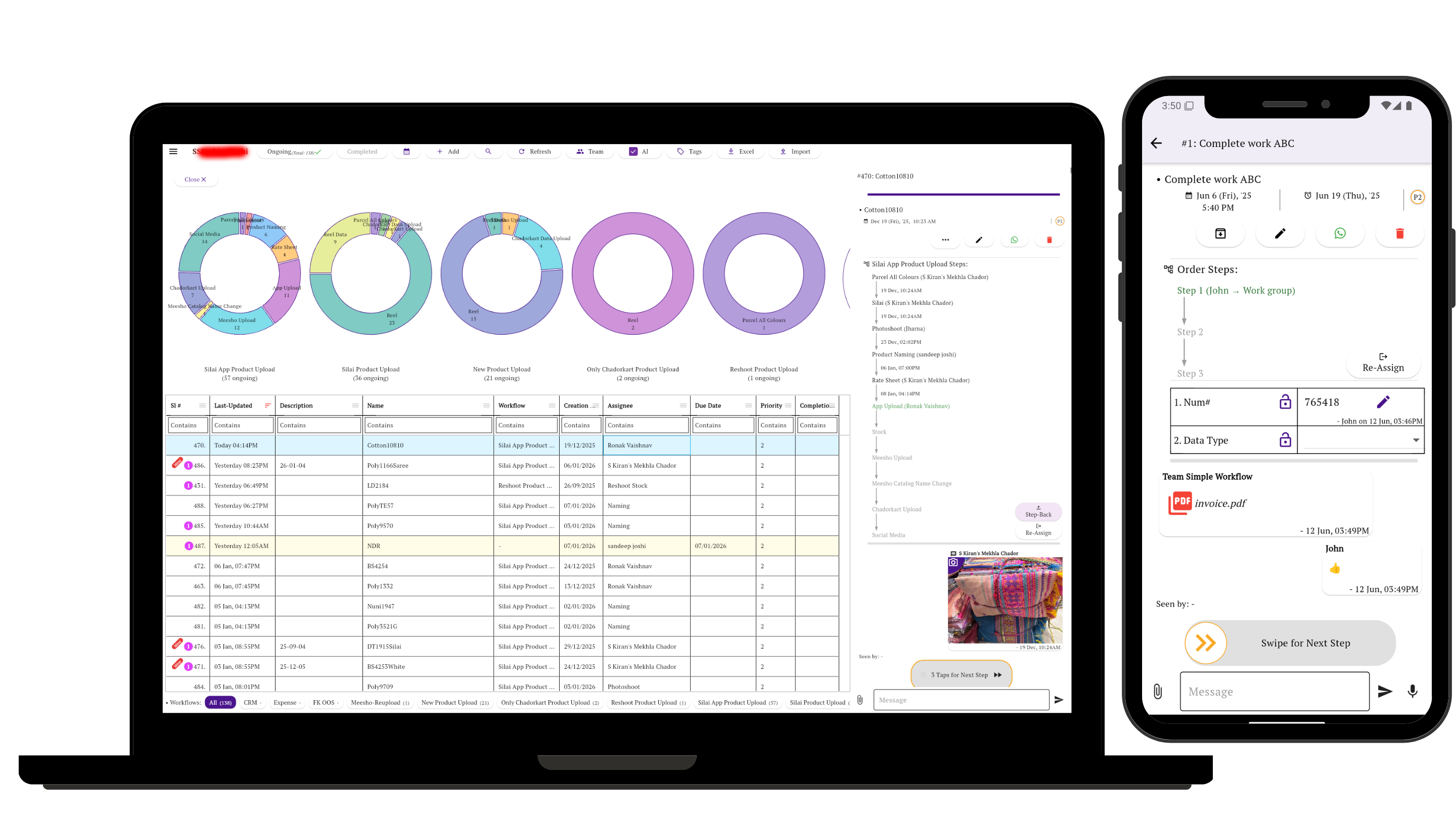
A complete case trail
Keep the next action and its context together
Create one task for each case and move it through the steps your team actually uses. The assigned person can see what is due, review the files and comments, and understand prior stage changes before acting.
Clear product boundary
Workflow coordination, not a system of record
Simple Workflow does not replace:
- Insurance policy administration
- Claims-processing software
- Loan-origination systems
- Accounting software
- Banking systems
- A CRM
- A regulated financial-record repository
Keep policies, claims, transactions, customer records and regulated financial records in the appropriate specialist systems. Use Simple Workflow for the assignments, handoffs, due dates and follow-ups around that work.
Start with one recurring case
Choose a renewal, assessment, endorsement, loan request or internal approval. Define the real waiting points and assign the next action.
Questions about insurance and finance workflows
What can an insurance or finance team track in Simple Workflow?
A team can track the people-driven stages around renewals, assessments, endorsements, loan requests and internal approvals, including responsibility, due dates, comments, files and history.
Can we use different steps for different case types?
Yes. Create separate workflows for the case types your team repeats, then name the stages and responsibilities to match your actual process.
Does Simple Workflow replace our insurance, lending, accounting, banking or CRM systems?
No. It coordinates assignments, handoffs and follow-ups around the work. Keep policies, claims, loan origination, transactions, customer records and regulated records in the appropriate specialist systems.